This playbook helps you identify which stage needs attention, from your profile to the follow-up. For an opening you can adapt to a particular match, go straight to first-message examples.
Quick Answer
The most useful disabled dating tips begin by identifying where your experience actually breaks down. If you receive few matches, review the profile and platform. If matches rarely reply, change the opener. If good conversations never become dates, make a smaller, clearer invitation. If first dates go nowhere, look at compatibility and follow-up rather than rebuilding everything at once.
Make one change for two weeks and judge it by the next meaningful step—not by likes alone. A good profile creates questions; a good message makes replying easy; a good invitation includes enough access information to feel comfortable. None of these guarantees chemistry, but each removes avoidable friction so genuine interest has somewhere to go.
Online dating makes it tempting to diagnose the entire problem from the last disappointing moment. Three quiet days can become “my profile is terrible.” A cancelled date can become “nobody is serious.” Sometimes the conclusion is right. Often it is simply too broad to be useful.
The mixed experience is not yours alone. In a U.S. survey, Pew Research Center found that 53% of people who had used online dating described it positively, while 46% described it negatively. The research was not disability-specific, but it is a useful reminder: the apps work for some people some of the time. Improvement starts with a smaller question—where does your own process stall?
First, find the broken handoff
Think of online dating as a series of handoffs. Your photos lead to the profile. The profile leads to a match. A first message leads to conversation. Conversation leads to a plan. A first date leads to a decision. You only need to fix the handoff that is failing now.
| What keeps happening? | Likely place to look | One useful test |
|---|---|---|
| Very few relevant matches | Platform, distance settings or profile | Try a clearer first photo and review local activity |
| Matches, but almost no replies | First message | Replace generic greetings with one specific observation |
| Conversations fade after a day | Message rhythm | Share something before asking the next question |
| Long chats, but no meeting | Invitation | Offer one short plan and one accessible alternative |
| First dates, but no second dates | Fit, expectations or follow-up | Send a clear message and review patterns after several dates |
Make the profile easy to respond to
A profile does not need to tell your whole story. It needs to help the right person imagine one conversation with you. “I like music, movies and travel” is accurate for millions of people. “I keep a list of tiny concert venues with decent seating” gives someone a place to begin.
Use a clear recent face photo first, then show ordinary life: a hobby, a social moment, a full-length image or a place you enjoy. Do not crop out mobility equipment simply because you think it lowers matches. Accurate photos may reduce the total, but they also reduce surprise and protect your time.
Give each profile detail a job
- One detail shows daily life: “Saturday mornings usually mean coffee and the farmers’ market.”
- One shows personality: “I will defend terrible creature-feature movies.”
- One shows direction: “I would like a relationship that can grow steadily.”
Mention disability when it feels useful, not because a template demands it. A short practical line can be enough. For a deeper rewrite, use our disabled dating profile guide rather than changing random sentences every few days.
Use the notice–share–ask first-message pattern
“Hey” leaves the other person with all the work. A long introduction can feel like homework. A better opener has three small parts: notice something specific, share a related detail and ask a question that is easy to answer.
- “You mentioned Sunday cooking projects. I finally learned a decent curry last month—what dish are you proudest of?”
- “Your photo from the aquarium made me laugh. I could watch sea otters for hours. Which exhibit was worth the trip?”
- “I noticed you prefer quieter weekends. Same here. Are you more bookstore-and-coffee or movie-at-home?”
Keep the opening about the person rather than their disability unless their profile clearly invites that subject. A mobility aid, scar or diagnosis is rarely the most interesting first detail available. For more situations and the reply after hello, see our disabled dating first message examples.
Stop turning conversation into an interview
A common chat pattern is question, answer, new question, answer. It looks attentive but feels like a form. Before asking the next thing, add a reaction or a small piece of your own life. “I have never tried pottery, but I like hobbies where being bad at first is part of the fun. What got you into it?” has somewhere to go.
Reply speed is not a reliable measure of interest. Pain, fatigue, work, care schedules, processing time and communication access all affect timing. What matters more is reciprocity over several exchanges: do both people answer, ask, remember details and return after a gap?
A quiet conversation does not always need rescuing
If you are carrying every exchange, stop adding better questions to compensate. Send one message that gives the other person room to contribute. If they do not, let the chat end. Energy saved is part of a better dating strategy.
Make the invitation smaller and clearer
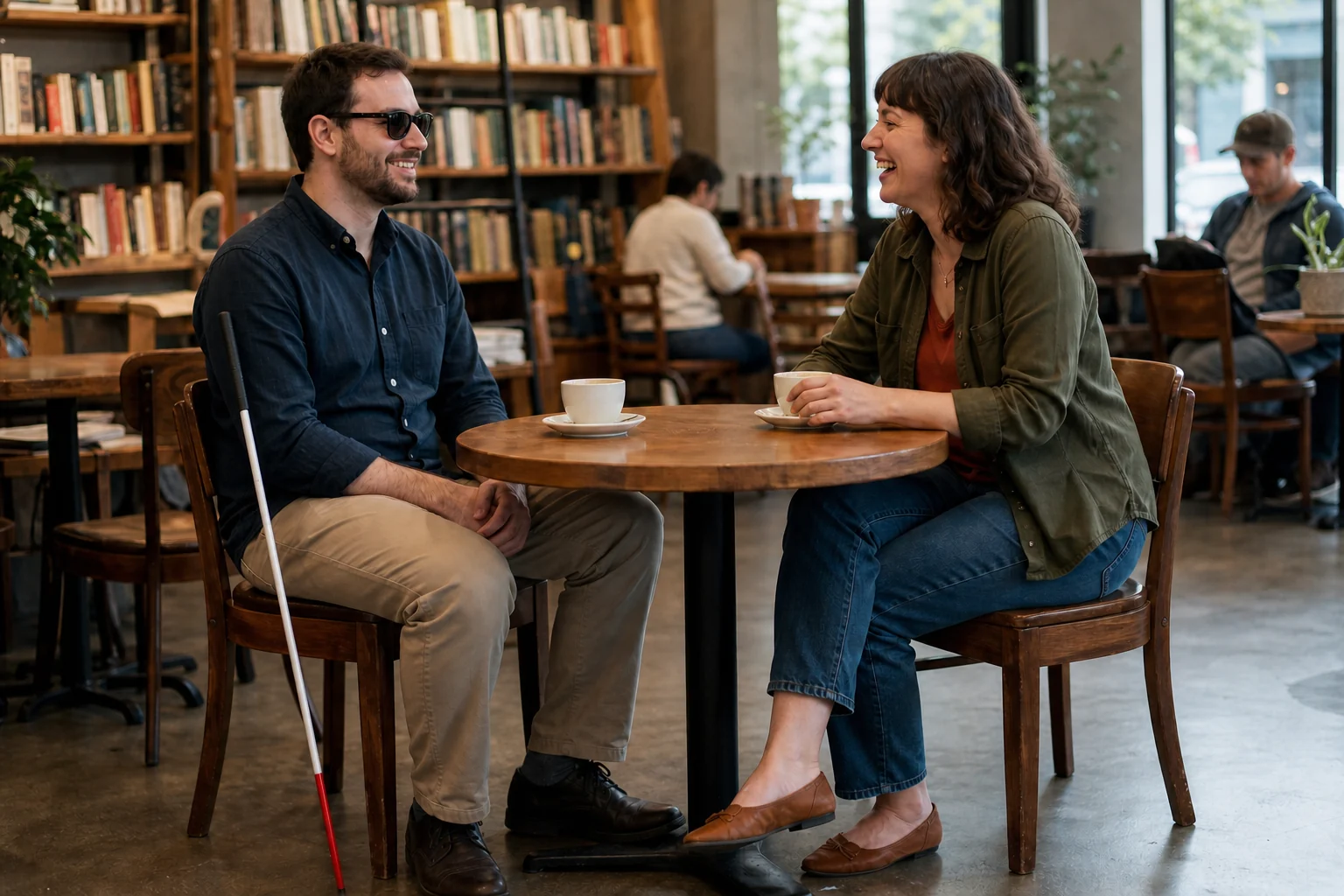
There is no correct number of messages before meeting. Look for mutual effort, consistent details and enough comfort to spend a short period together. Then offer a real plan rather than “we should hang out sometime.”
Try: “I’m enjoying this. Would you like coffee at Pine Street Café on Saturday afternoon? An hour works well for me, and I’m also happy to start with a video call.” A specific invitation is easier to accept, change or decline.
If you need to discuss disability, focus on function: step-free entrance, captions, a quieter table, room for a chair, a shorter meeting or flexible timing. Our guide to dating with a disability covers disclosure choices, while the accessible first-date checklist helps verify the venue and backup.
Read the response, not the perfect wording
People sometimes say an awkward thing and recover well. Others know all the approved language and still dismiss what you need. Watch what happens after a correction or request.
- Green: “Thanks for telling me. Does the earlier time or the video call work better?”
- Yellow: They seem unsure but ask a respectful question and adjust.
- Red: They argue, demand medical details, touch equipment without permission, turn disability into a sexual novelty or expect gratitude for basic interest.
You do not need to educate every match. Curiosity can grow into understanding; entitlement usually grows into more entitlement.
Protect your pace and your way home
Safety advice has to fit access. A public venue is not useful if the entrance fails, the ride leaves early or you cannot communicate with staff. RAINN recommends controlling your transportation, sharing plans with someone you trust and preparing an exit. Choose a check-in method and backup ride that work for you.
Keep financial details, identity documents, medical records and care schedules private while trust develops. If someone requests money, codes, gift cards or account access, stop contact and report the profile. AbleMatchup’s online dating safety guidance has a fuller warning-sign checklist.
After the date, replace guessing with one clear message
A good follow-up does not need a strategy. It needs a decision. Send it within a day or two unless you agreed on another pace.
- If interested: “I enjoyed talking about travel disasters with you. I’d like to meet again—would next weekend work?”
- If not interested: “Thank you for meeting me. I didn’t feel the connection I’m looking for, but I wish you well.”
- If uncertain: “I enjoyed meeting you and need a little time to think. I’ll message by Thursday.”
Do not promise friendship to soften a no unless you genuinely want it. If a date declines, accept the answer without requesting a medical, emotional or romantic explanation.
Run a 14-day experiment
- Choose the one broken handoff you want to improve.
- Make one change: first photo, profile detail, opener, invitation or follow-up.
- Use the change consistently for two weeks without checking results every hour.
- Count meaningful next steps: relevant matches, replies, balanced chats or agreed plans.
- Keep what helped. If nothing changed, test the next likely cause or compare different disability dating sites.
This is not about turning yourself into a better product. It is about making the path between interest and meeting less confusing. Chemistry remains unpredictable. Your process does not have to be.
Disabled Dating Tips FAQ
How can disabled singles get more replies on dating apps?
Use a current first photo, include two or three specific conversation openings in the profile and send a first message that notices one detail, shares something small and asks an easy question. Review the profile if matches are low; review messages if matches arrive but replies do not.
What is a good first message on a disability dating site?
Refer to one detail from the person’s profile, add a related detail about yourself and ask a question that can be answered without much effort. Keep disability out of the opener unless the person has invited that conversation.
How long should you message before arranging a date?
There is no fixed number of days. Suggest a short public meeting or video call after both people have contributed, answered questions and shown consistent interest. Keep messaging longer if either person needs more time to feel comfortable.
Should a first date include a backup plan?
Yes when access, transport, pain, fatigue, weather or sensory conditions could change the plan. A useful backup should be easier than the original plan and agreed without treating a change as failure.
What should I text after a first date?
Send a clear message within a day or two. If interested, name something you enjoyed and suggest meeting again. If not interested, be kind and direct. If uncertain, ask for the time you genuinely need instead of disappearing.
This article offers general dating, accessibility and safety information. Individual access needs, communication styles and experiences differ. The Pew figures describe U.S. online daters generally, not disabled users specifically.
Try the Next Meaningful Step
Create a profile with real conversation openings, then focus on one compatible person at a time.
Join AbleMatchup Free