Quick Answer
Dating with a disability works best when you make choices around the life you actually have, not the version of yourself you think a date expects. Use accurate photos, talk about the interests and relationship you want, and share disability information when it helps you feel safer or makes a plan work. You do not owe a medical file to prove that you are honest.
Confidence does not have to arrive before you begin. It often grows after a few manageable actions: sending one thoughtful message, naming an access need without apology, choosing a venue with an easy exit and noticing how the other person responds. The goal is not to make disability invisible. It is to find someone who can hold practical reality and attraction in the same conversation.
A very ordinary Friday can involve more decisions than most dating advice admits. Do you show the cane in your first photo? Is “low-key evening” clear enough to explain limited energy? Does the restaurant’s single photo of a ramp mean the restroom is accessible too? And if symptoms change at 4 p.m., will cancelling look like disinterest?
These are not niche concerns. The CDC reports that more than one in four U.S. adults has some type of disability. Yet much of online dating still assumes consistent energy, easy transport, fast replies and spontaneous plans. Good disabled dating advice has to begin with that gap.
Start with the life you actually have
You do not need to become more independent, less anxious or completely comfortable with your body before dating. You do need a reasonably honest picture of what makes dating enjoyable and sustainable for you.
Think through one good week and one difficult week. How far can you comfortably travel? What time of day usually works? Do you prefer text, voice, video or slower messages? What kind of venue lowers the amount of planning? The answers are not restrictions; they are the shape of a date that gives you enough attention to be present.
| Worry | Useful preference | What you might say |
|---|---|---|
| “I might get tired.” | A 60-minute first meeting near home | “Coffee works well for me if we keep the first meet fairly short.” |
| “They may notice my speech.” | A quieter place and patient conversation | “Noise makes communication harder for me. Could we pick the calmer café?” |
| “The venue may not work.” | Confirmed access plus a backup | “I can call about the entrance, and we can keep the bookstore café as Plan B.” |
Give your profile something another person can answer
A profile made entirely of values—kind, loyal, honest—sounds pleasant but gives a stranger little to work with. Replace one adjective with a small detail: the Sunday breakfast you make, the terrible movie you defend or the park where you know every accessible path.
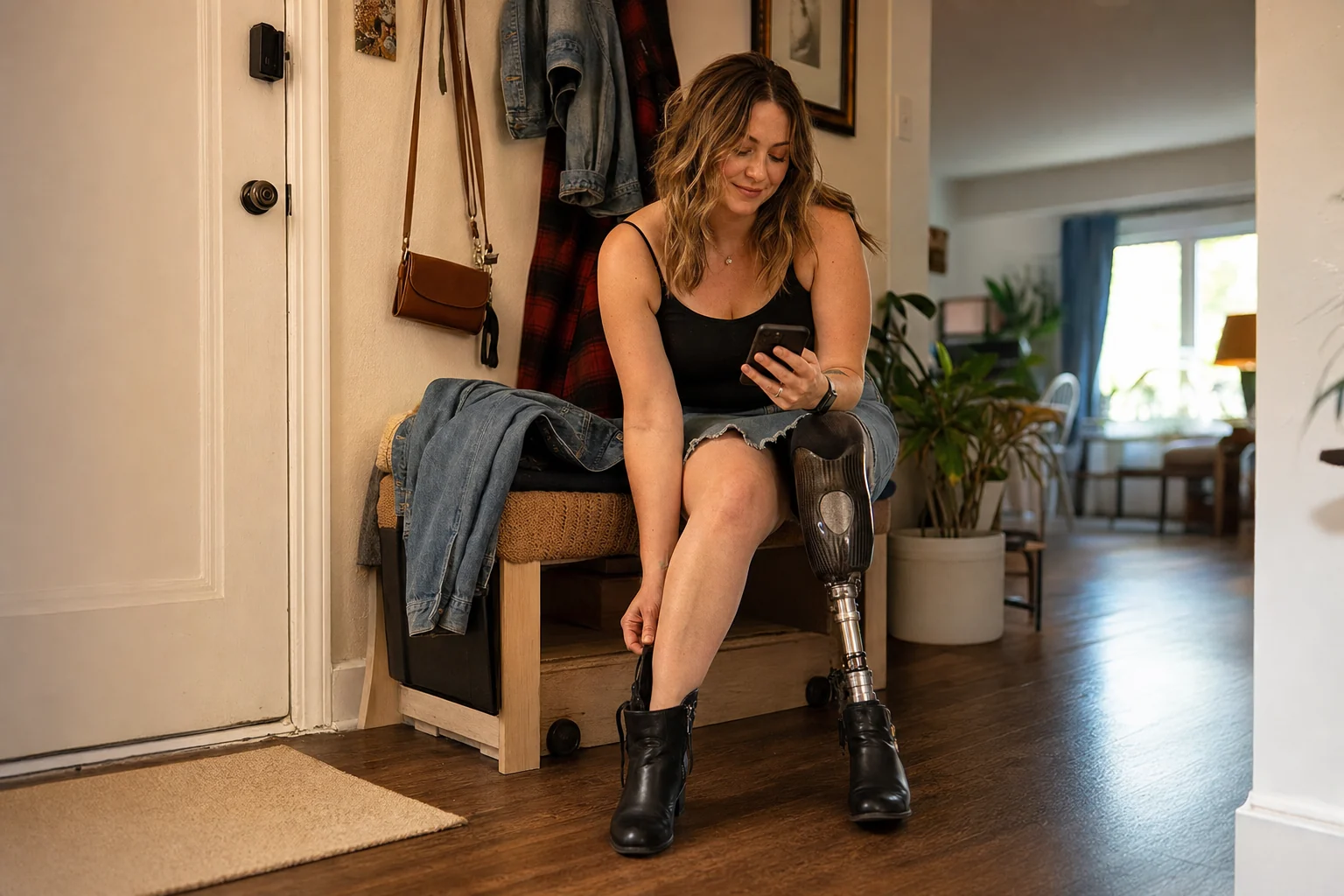
Disability can appear as identity, a practical note, a visible part of your photos or not at all. There is no requirement to lead with it. Use recent images that look like your current life rather than hiding mobility equipment and hoping the subject never comes up. For examples and prompts, see our guide to writing an authentic disabled dating profile.
Disability disclosure is not a test of honesty
The “right time” to disclose depends on what the information needs to do. If it helps someone recognize you or plan access, sharing before meeting may save stress. If it is private and has no effect on the first date, waiting may feel better. Visible disability removes some control over timing, but it does not remove your right to decide how much explanation follows.
Three reasonable timings
- In the profile: useful when disability is part of your identity, visible in photos or something you prefer to establish early.
- During early messages: useful when you want some trust first but need to discuss communication, energy or access before meeting.
- When a plan becomes specific: useful when the practical detail matters more than a diagnosis.
Try giving the smallest complete answer: “I have a chronic condition, so my energy can change. Flexible plans help.” That is enough information to plan. You can tell the longer story later if the person earns that trust. Our dating privacy guide offers a public, personal and private framework.
Notice what an awkward question reveals
Some people are clumsy but willing to learn. Others ask intrusive questions because they feel entitled to your body or medical history. The difference often appears after you set a boundary.
- “I am happy to explain what helps with the date, but I do not go into medical details this early.”
- “That is more personal than I want to get by text. Tell me what made you ask.”
- “My chair is part of how I move around. Please ask before touching it.”
- “I do not mind curiosity, but I would also like us to talk about something other than disability.”
A respectful person may apologize, rephrase or move on. Someone who argues with the boundary is giving you useful information before you have invested more time.
Make the first date easy to change
The best first-date plan is not the most impressive one. It is a plan with enough certainty to feel safe and enough flexibility to survive real life. Confirm only the access features you actually need: entrance, seating, restroom, captions, lighting, noise, food, transport or space for equipment.
Keep a Plan B that is genuinely easier, not the same plan in another building. A video call, takeaway in a public park or a shorter coffee can rescue a day when pain, weather or transport changes. Our accessible first-date checklist covers venue questions in more detail.
Let attraction and practical help share the room
Dating as a disabled person can become strangely administrative: transport, medication timing, seating, fatigue. Do the planning, then deliberately return to flirting, humour and curiosity. Ask what music they play too loudly, what they cook when nobody is watching or which trip they would repeat.
If help is relevant, be specific. “Would holding the door help?” is easier to answer than “Do you need anything?” Accept no without repeating the offer. Assistance does not make one person the caregiver and the other the cared-for person; healthy relationships remain reciprocal even when contributions look different.
Safety includes being able to leave
Generic advice to “meet in public” is incomplete if you cannot enter the venue, book a suitable ride home or communicate easily when stressed. Use an independent journey where possible, tell someone the plan and arrange a check-in that works with your communication style.
RAINN recommends planning an exit strategy and prioritizing your comfort if a date crosses boundaries. The FTC also advises never sending money or gifts to an online romantic interest you have not met. AbleMatchup’s dating safety page brings these steps into one checklist.
A cancelled date is not a debt
If access fails or your body changes the plan, you can leave or reschedule. You do not owe extra personal information, physical affection or another date because someone travelled, paid or “was understanding.”
Sort rejection from incompatibility and ableism
Rejection hurts even when you know the match was wrong. Sometimes disability is part of the reason. Sometimes it is timing, chemistry, distance or a life preference nobody needs to defend. You may never get a clean explanation.
Look at behavior instead. A person who says their life cannot fit your access or energy needs may be naming incompatibility. A person who assumes you cannot have sex, work, parent or make decisions is relying on ableism. Neither response requires you to persuade them. Save your effort for people who ask, listen and remain interested in the rest of you.
Try a month that does not take over your life
- Week one: choose one platform and create a profile that contains three genuine conversation openings.
- Week two: send two thoughtful messages rather than checking the app all day.
- Week three: try one short video call or accessible public meeting with an exit plan.
- Week four: review how you felt—not just how many matches appeared. Adjust distance, timing, disclosure or the platform itself.
If the current app feels wrong, compare the options in our guide to disability dating sites. Changing the environment is often more useful than rewriting yourself again.
Dating With a Disability FAQ
When should I mention my disability while dating?
There is no single correct time. Mention it in your profile, during early messages or before meeting when doing so helps you feel comfortable or makes planning easier. Share practical information without feeling required to provide a complete medical history.
How do I ask for an accessible first date?
Name the feature that affects the plan and offer one workable option. For example, ask for step-free access, a quieter table, captions, a shorter meeting or flexibility if symptoms change.
What if someone asks an intrusive disability question?
You can redirect, answer briefly or decline. A useful response is: “I am happy to discuss what helps us plan a date, but I do not share medical details this early.”
How can I feel more confident dating as a disabled person?
Build confidence through manageable actions rather than waiting to feel fearless. Use accurate photos, choose dates that fit your energy and access needs, keep an independent exit plan and notice whether the other person responds respectfully.
Are disability dating sites better than mainstream apps?
Specialist platforms can reduce repetitive explanations, while mainstream apps may offer more nearby members. Try the type that fits your priorities and compare accessibility, active profiles, privacy, safety and quality of conversation.
This article provides general dating, accessibility and safety information. Disability experiences, support needs and local services differ; use the advice that fits your circumstances.
Make Room for a Date That Fits Your Life
Create a profile around your interests and relationship goals, with control over when and how you discuss disability.
Join AbleMatchup Free