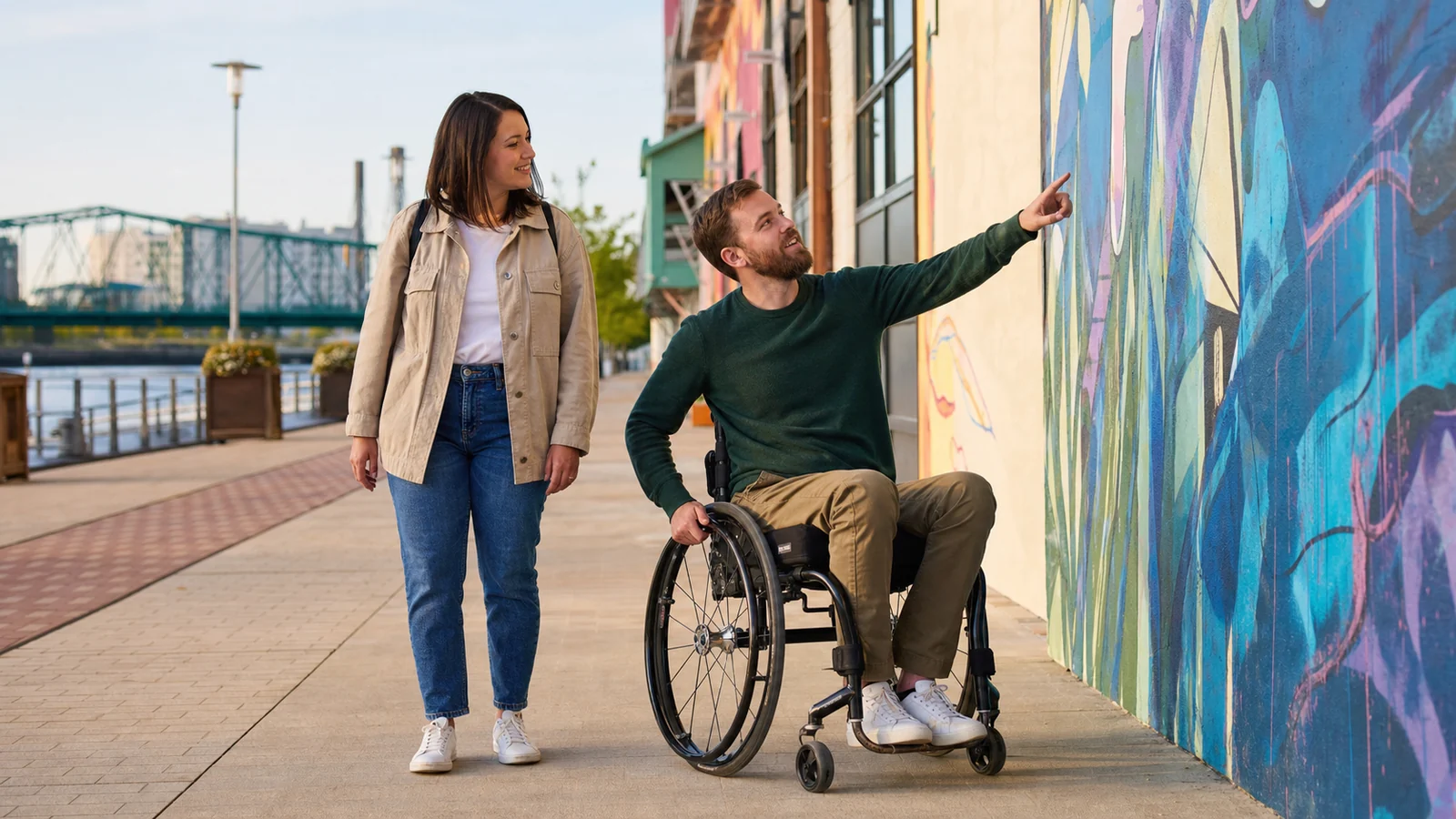
Wheelchair dating is dating, with the same mix of attraction, uncertainty, humour and hope found in any new connection. A chair may shape transport, venue access or how long an outing feels comfortable, but it does not tell you what a person enjoys, how independent they are, or what kind of partner they will be. The useful approach is simple: notice the person, ask practical questions when they become relevant, and believe the answers.
The short version
Lead with interests and relationship goals. Before meeting, confirm the route, entrance, seating and toilet access with the venue rather than relying on an “accessible” label. Ask before helping or touching mobility equipment. Keep a backup plan, and let the wheelchair user define what comfort and independence mean for them.
Begin wheelchair dating with the whole person
A profile is more memorable when it gives someone something specific to respond to. “I spend Saturdays hunting for second-hand records” opens a conversation; a list of diagnoses rarely does. A wheelchair user may choose to show their chair in photographs, mention mobility in the text, discuss it later, or say nothing until a meeting is being arranged. Each choice is valid. Disability information is personal information, not an admission fee for conversation.
The World Health Organization estimates that about 1.3 billion people—roughly one in six worldwide—experience significant disability. It also describes disability as an interaction between health conditions and environmental or personal factors. That distinction matters in dating: a flight of steps can create a barrier, while a level entrance removes it. Read the WHO disability overview for the broader context.
Write a profile that makes replying easy
Choose two or three details that show how you live: the meal you cook well, a team you follow, an opinion about films, or the small ritual that improves your week. Add a clear relationship intention without turning the profile into a contract. If access is relevant to favourite activities, write it naturally: “I know every level riverside route in town” says more than a generic label.
- Use recent photographs with different settings, expressions and camera distances.
- Name specific interests instead of broad adjectives such as “fun” or “kind.”
- Say what a good weekend looks like and what kind of connection you hope to build.
- Share mobility details only to the degree that feels useful and safe.
Plan access without turning the date into an audit
Many venue listings use “wheelchair accessible” loosely. One person may need step-free entry and room for a compact manual chair; another may need a wide turning circle, a lift with enough depth for a power chair, or an adult changing facility. Call the venue and ask concrete questions. Staff who can describe the route from pavement to table are more helpful than a single yes-or-no answer.
| Check | Useful question | Why it matters |
|---|---|---|
| Arrival | Is the path from parking or public transport level and firm? | A venue can have a ramp while the route to it remains difficult. |
| Entrance | Are there steps, heavy doors or a portable ramp that must be requested? | Details prevent an awkward surprise at the door. |
| Inside | Are aisles wide, tables movable and lifts operating? | Independent movement should not depend on rearranging a whole room. |
| Facilities | Where is the accessible toilet, and is it being used for storage? | A listed facility is useful only when available. |
| Backup | What nearby place can work if the first option fails? | A calm alternative protects the mood of the date. |
Share the findings without making your date manage your anxiety: “I checked; the entrance is level, tables move, and the accessible toilet is on the same floor. Does that setup work for you?” This gives useful information and leaves room for the person to add what you missed.
Talk about wheelchairs, assistance and mobility respectfully
A wheelchair is part of someone’s personal space. Do not lean on it, move it, push it or hang a bag from it without permission. If you think help might be useful, ask once and accept the answer: “Would you like a hand with the door?” is enough. Repeated offers after a no can feel less like care and more like doubt.
Curiosity is not automatically rude, but timing and purpose matter. On an early date, detailed questions about prognosis, pain, sex or bodily functions can feel invasive when there is not yet trust. A better test is relevance: do you need the answer to make today’s plan work, or are you asking because disability feels unfamiliar? Let mutual disclosure grow at a similar pace.
Language that keeps the conversation human
- “Is there anything that would make this plan easier or more comfortable?”
- “Would you prefer that I hold the door, or have you got it?”
- “I’m happy to talk about access; you decide how much detail feels useful.”
- “If our first venue is a mess, I found a level café two minutes away.”
Avoid praise for routine activities—calling someone “inspirational” for commuting, working or buying groceries can be distancing. Compliment choices, wit, style, skill or kindness as you would with anyone else.
Wheelchair-friendly first dates: choose the activity, then check the route
The best wheelchair date starts with an activity both people actually enjoy. A museum, spacious coffee shop, paved garden route, adaptive activity, food market or video date can all work. Access varies between venues and wheelchair users, so ask about the specific features your date needs. Duration matters too; transfers, pain, fatigue and transport can affect timing even when the venue has a step-free entrance.
| Date idea | Confirm before meeting | Easy alternative |
|---|---|---|
| Café and conversation | Step-free route from the street, usable toilet, space beside the table and a meeting point away from a steep kerb. | A nearby café with confirmed access or a shorter outdoor coffee. |
| Gallery or museum | Lift availability that day, accessible exhibits, seating along the route and a way back to the exit. | One accessible exhibit plus a relaxed drink. |
| Market or garden | Surface conditions, distance, weather cover and seating or rest stops. | A paved section, indoor market or seated activity. |
A label such as “wheelchair accessible” does not tell you whether a doorway fits a particular chair or whether the toilet is usable. Ask the venue about the whole route, and send the answer to your date without deciding for them. If the plan changes, a simple message works: “The lift is out today. Would you prefer the café across the street or another day?”
A simple planning sequence
- Offer two ideas. Choice feels collaborative and avoids making one person the event planner.
- Confirm practical details. Check access directly, then send the information in one clear message.
- Choose an easy meeting point. Make it visible, level and away from crowds.
- Keep the first meeting flexible. A 60–90 minute plan can extend naturally if both people want more time.
- Have an equal exit. Each person should be able to leave without depending on the other for transport.
Weather deserves attention. Rain can make steep ramps, cobbles and grass harder to cross; heat and cold can affect some health conditions and equipment batteries. A backup is considerate, not pessimistic. Our accessible first-date planning guide goes deeper into routes, timing and Plan B messages.
Keep independence and reciprocity in the relationship
As a relationship develops, practical support may become part of everyday life. That does not make one partner a permanent helper or the other a passive recipient. Healthy couples discuss what assistance is welcome, what should remain independent, and how both people contribute. Contributions may look different: one person handles driving while the other plans meals, manages bookings or provides emotional steadiness.
Do not assume a partner should provide personal care. Some wheelchair users use professional assistants, family support or no assistance at all. If care tasks ever enter the relationship, agreement, privacy and the freedom to change arrangements are essential. Romance needs room outside logistics.
Intimacy benefits from direct, unhurried conversation
Ask what feels good and what positioning, transfers, temperature or pain considerations matter. Do not treat the wheelchair as evidence of what someone can or cannot do sexually. Consent is ongoing, and a person can revise an answer at any point. A warm question—“What would help you feel comfortable?”—does more than confident guessing.
Protect privacy and safety while trust develops
Mobility details can reveal routines, home access or times when someone is alone. Keep exact addresses, care schedules, financial information and identifying documents private during early conversations. Meet in a public, familiar place, tell a trusted person the plan, arrange your own journey home and use the platform’s report tools when behaviour feels wrong.
Money requests are a firm warning sign. The U.S. Federal Trade Commission advises people never to send money or gifts to a romantic interest they have not met in person. Its romance scam guidance explains common tactics. A story about equipment, treatment or travel does not make a request safer.
Wheelchair dating works best when access is treated as a shared practical detail and the person remains at the centre. You do not need perfect vocabulary or a flawless venue. You need respect, accurate information, a willingness to listen and enough humility to adjust.
Wheelchair Dating FAQ
Should I mention my wheelchair in my dating profile?
Only if you want to. Showing or mentioning a wheelchair can make practical planning easier, while waiting can protect privacy. Choose the approach that feels honest and safe for you.
Is it rude to ask why someone uses a wheelchair?
It can be too personal early on. Ask only when trust has developed or when a functional detail is relevant to the plan, and accept that the person may not want to explain.
What is a good first date for a wheelchair user?
Choose an activity both people enjoy, then verify the complete route, entrance, interior space, seating and facilities. A level café, accessible gallery, paved garden or video date may work.
Should I offer to push a date's wheelchair?
Ask before touching or moving a wheelchair. Offer once in a neutral way and respect the answer without insisting.
How can I recover when a venue is not accessible?
Acknowledge the problem without blaming your date, use the backup plan, and contact the venue later. Keeping the moment calm matters more than defending the original choice.
This guide offers general dating and access-planning information, not medical or legal advice. Individual needs differ; ask the person and respect their answer.
Meet People Who Value the Whole You
Build a profile around your interests, values and relationship goals, with control over what personal information you share.
Create Your Free Profile