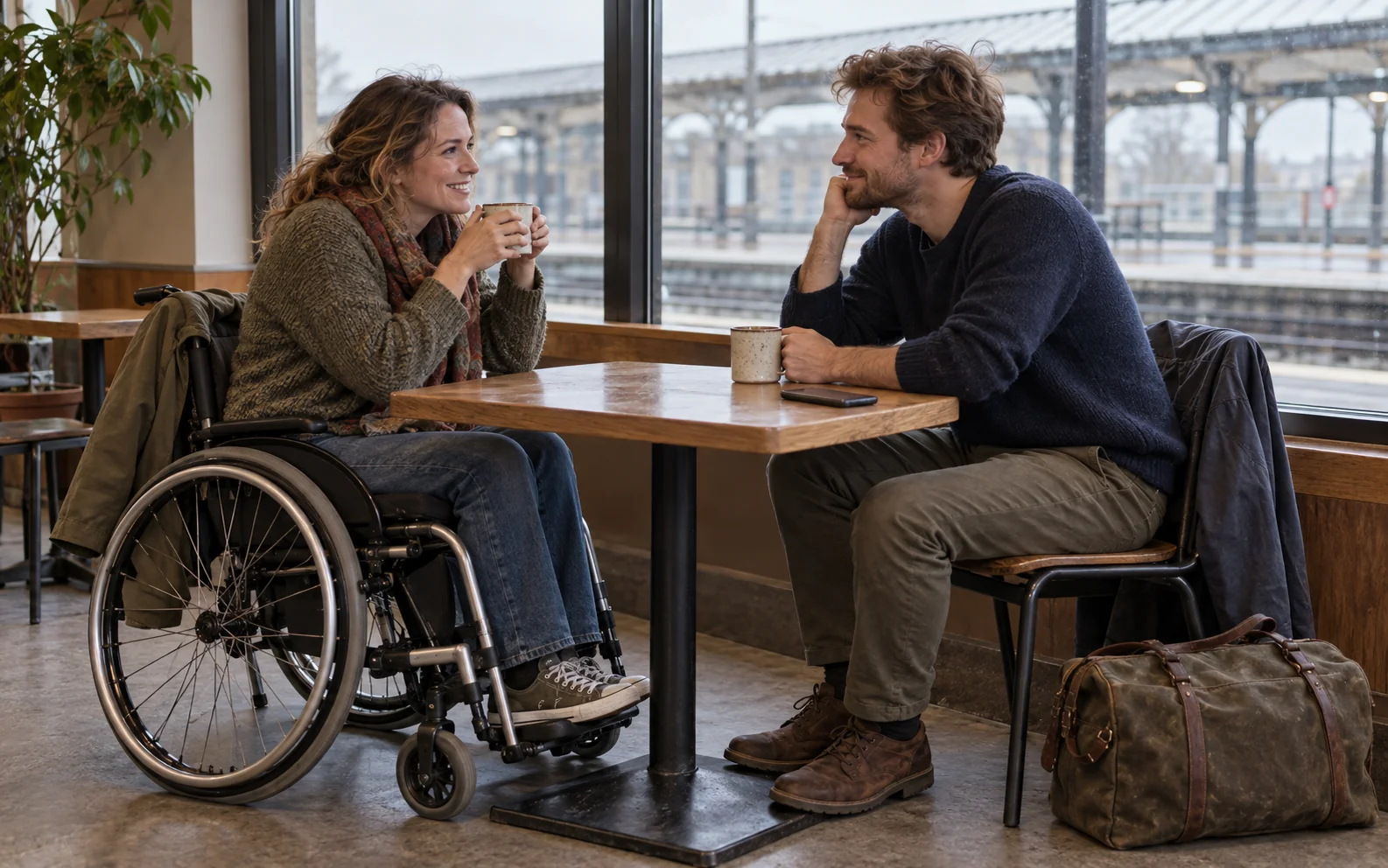
Long-distance dating with a disability becomes more manageable when a visit is planned around the whole journey, the real cost and the time needed afterwards. Before booking, agree who travels, where each person stays, how costs are handled and what happens if the plan changes. A first visit should leave both people able to say yes, shorten the date or leave independently.
The difficult conversation often begins after the easy one. You have exchanged messages for weeks, enjoyed a few calls and started imagining a real coffee rather than another evening with a screen. Then someone suggests a weekend. Suddenly there are train changes, hotel bathrooms, travel assistance, time off work and the question of whether you will have any energy left when you arrive.
Those details deserve attention before the ticket is bought. They can tell you something about compatibility too: does the other person help you find workable options, or turn every adjustment into proof that you are not interested enough?
Decide what the first visit is meant to answer
For a first meeting, the useful question is whether you enjoy being together in person. You do not have to find out how well you share a bedroom, manage a full weekend or fit into each other's families at the same time. A smaller plan leaves room to notice attraction without giving travel pressure control of the date.
Have an accessible live conversation before making a substantial journey. Ask about communication preferences and choose video, signing, captions, voice or a combination that works for both people. A successful call does not verify every claim, but it gives you more information than text alone. A video date can be simple: share a coffee, discuss a film you both watched or exchange a short tour of a favourite hobby. Keep addresses, documents and other private details out of view.
Talk about the visit as a proposal, not a promise: “I'd like to meet. A short afternoon near the station would work better for me than a full weekend. Would that feel worth planning together?” Their response is useful information before either of you pays.
The halfway point is not always the fair meeting point
A location halfway between two homes may look equal on a map and be very unequal in practice. Two changes, an unreliable lift and an unfamiliar taxi arrangement can cost more effort than a longer direct trip. Compare the complete routes rather than the miles.
Imagine one person can reach the other's town on a direct train, while a halfway meeting would require both people to change trains and navigate an unfamiliar station. Meeting in the familiar town might be the better first plan. That does not settle who should travel every time; it solves this visit.
Ask four concrete questions together:
- Which route has the fewest uncertain steps, including the journey from the station or airport?
- Who has more reliable transport, time, money and physical capacity for this visit?
- Where can each person get the support they normally use without relying on a new date?
- Which plan leaves both people with a realistic way home if the meeting is brief?
When one person travels less, they can contribute by researching venues, checking details and making local arrangements. Equal care does not require identical tasks. If both people have limited travel capacity, a longer period of remote dating or fewer visits may be the sustainable answer.
Count the trip from your front door to your recovery time
The scheduled journey time is only one part of the visit. Add getting ready, reaching the departure point, waiting, transfers, the date itself and returning home. Think about the following day too. Use what you know about your own needs rather than a universal rule about how many hours of rest a disabled person requires.
For long-distance relationships with chronic illness, a short date after a long journey may be a bigger commitment than an entire local evening. Say that plainly: “I can travel on Friday, but I need a quiet evening after arrival. Saturday lunch is the part I'm looking forward to.” That gives the other person a clear plan without asking you to explain symptoms in detail.
Check the last stretch as carefully as the main journey
Confirm the route from arrival to your accommodation: entrance, pavement or path, lift, accessible vehicle if needed and a usable pickup point. An accessible hotel is little help if you cannot get from the station to its door. For flights to, from or within the United States, the U.S. Department of Transportation's disability travel guidance is a useful starting point. Check the relevant carrier and authority for your own route, and confirm assistance directly; rules and practical arrangements vary.
Ask the accommodation about the room you would actually receive. “Do you have accessible rooms?” is less useful than questions about the doorway, bathroom layout, shower, bed height or other feature you need. Request written confirmation of essential details and ask what happens if that room becomes unavailable. An advertised label is not enough information to decide whether it works for you.
Keep the date itself easy to change. One meal and a nearby optional activity are usually easier to adjust than prepaid tickets in three different places. Our accessible first-date planning guide covers venue checks; this article focuses on the travel and overnight decisions around them.
Talk about money before either person books
A ticket price can hide the cost of transfers, an accessible room, food, support arrangements and taking time away from work. Compare the full visit cost with what each person can comfortably afford. A plan that only works if nothing changes is a fragile first plan.
Discuss who pays for which items and what happens if a booking cannot be refunded. One person may cover their own travel while the other buys lunch; another pair may share agreed costs later. There is no required split. What matters is that neither person has to spend more than they can manage to demonstrate affection.
Early dating also needs financial boundaries. Book through providers you can check, keep control of your reservations and do not send money to an online romantic contact to solve a sudden travel or medical emergency. The FTC's romance-scam guidance explains why these requests deserve caution. A planned visit is not a reason to share bank details or identity documents with your match.
You can keep the conversation warm and direct: “I'd love to meet, but two nights away is outside my budget. Could we plan one afternoon, or choose a later date when I can book a workable route?” A compatible response might involve a different plan. Pressure, shame or an urgent demand for payment gives you a reason to reconsider.
Keep overnight arrangements separate from romantic expectations
For a first visit, accommodation you control can protect both independence and comfort. Staying at someone's home may be cheaper, but it can also make leaving harder and create expectations neither person has discussed. Travel does not create an obligation to stay together, have sex or continue a date.
Consider whether you can enter and leave your accommodation independently, use the facilities you need and arrange support without turning your date into a carer. If you normally travel with a support person, explain the practical role and agree how private conversation will work. Your date should know the plan; they do not need private care instructions that are unrelated to it.
Send booking and travel details to a trusted person rather than relying only on the person you are meeting. Keep your phone charged and retain access to your return booking. The online dating safety guide covers public meetings and independent transport in more detail.
Agree on a smaller plan before you need one
A visit can change because of health, weather, transport disruption or simple discomfort. Agree which parts can move and which conditions would mean postponing. This is more useful than promising, “I'll definitely be fine.”
A planning note you can share
Our first plan: Saturday lunch near the hotel, then an optional gallery visit.
If travel takes more out of me: keep lunch, skip the gallery and leave the evening open.
If the essential access fails: use the confirmed nearby backup; if neither option works, postpone.
If we need to cancel: each person manages their own bookings and we discuss another date without promising one immediately.
This is an illustrative plan, not a rulebook. Choose details that fit your visit. If changing plans is already a difficult part of dating for you, our guide to dating with chronic pain offers wording for making a plan smaller without losing the connection.
After meeting, ask whether this could work again
Enjoying the date and being able to repeat the journey are separate questions. After you have had time to recover, talk about both. Did the connection feel mutual? Did the practical effort feel shared? Could you afford and manage another visit without exhausting the rest of your life?
Long-distance dating with a disability does not need a promise of relocation after one good afternoon. It does need some honesty about the next few months. Discuss a realistic visit rhythm, the kinds of contact you enjoy between meetings and when to review the arrangement. A daily call may suit one couple; text with a planned weekly conversation may suit another.
If every visit depends on one person absorbing all the expense and disruption, the arrangement needs to change. If neither person can make a repeatable plan, stepping back can be a practical decision even when you like each other. Choose a relationship rhythm both people can live with, then leave enough space inside the visit to enjoy the person you travelled to meet.